
2026年度AI大模型调度中枢横向评测:企业级API聚合平台的选型复盘
2026-06-29 3372548

2026-06-19 0
In this episode of the Agent Factory, I sat down with Rody Davis, one of Google’s top agentic engineers. We dive into the massive shift from traditional IDEs to agent-first platforms, the reality of code reviews in an AI-driven world, and how to use "skills" to perform at a 100X level.
This post guides you through the key ideas from our conversation. Use it to quickly recap topics or dive deeper into specific segments with links and timestamps.
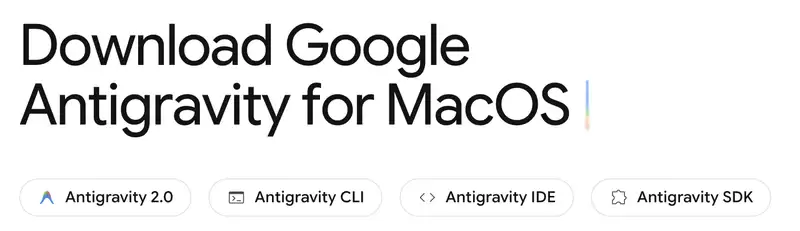
Antigravity 2.0 has evolved from a simple agentic IDE into a full-scale agent-first platform. It now consists of four core pillars: a standalone desktop Agent Manager for orchestration, a robust CLI for server-side work, an SDK for custom Python-based workflows, and a specialized IDE. This unbundled approach allows developers to compose their own environment, managing multiple folders and complex project structures without being forced into a single-workspace layout.
We explored the strategies elite engineers use to scale their impact and reduce the "cognitive toil" of daily development.
Timestamp: 01:55
Rody explains that AI isn't just about writing code; it's about accelerating the entire lifecycle. He uses agents to write richer test suites and prototype multiple versions of an app before committing to a framework. By offloading "toil", like building marketing sites, he can focus on high-level architecture and problem-solving.
Timestamp: 03:05
A core philosophy in Rody’s workflow is the use of "Skills." He views skills as a way to compress context for the model. "It’s literally a cheat sheet for the agent," Rody notes. By providing the agent with specific design systems or API documentation, the model becomes significantly faster and more accurate, avoiding the latency of searching through massive, unorganized docs.
Timestamp: 04:17
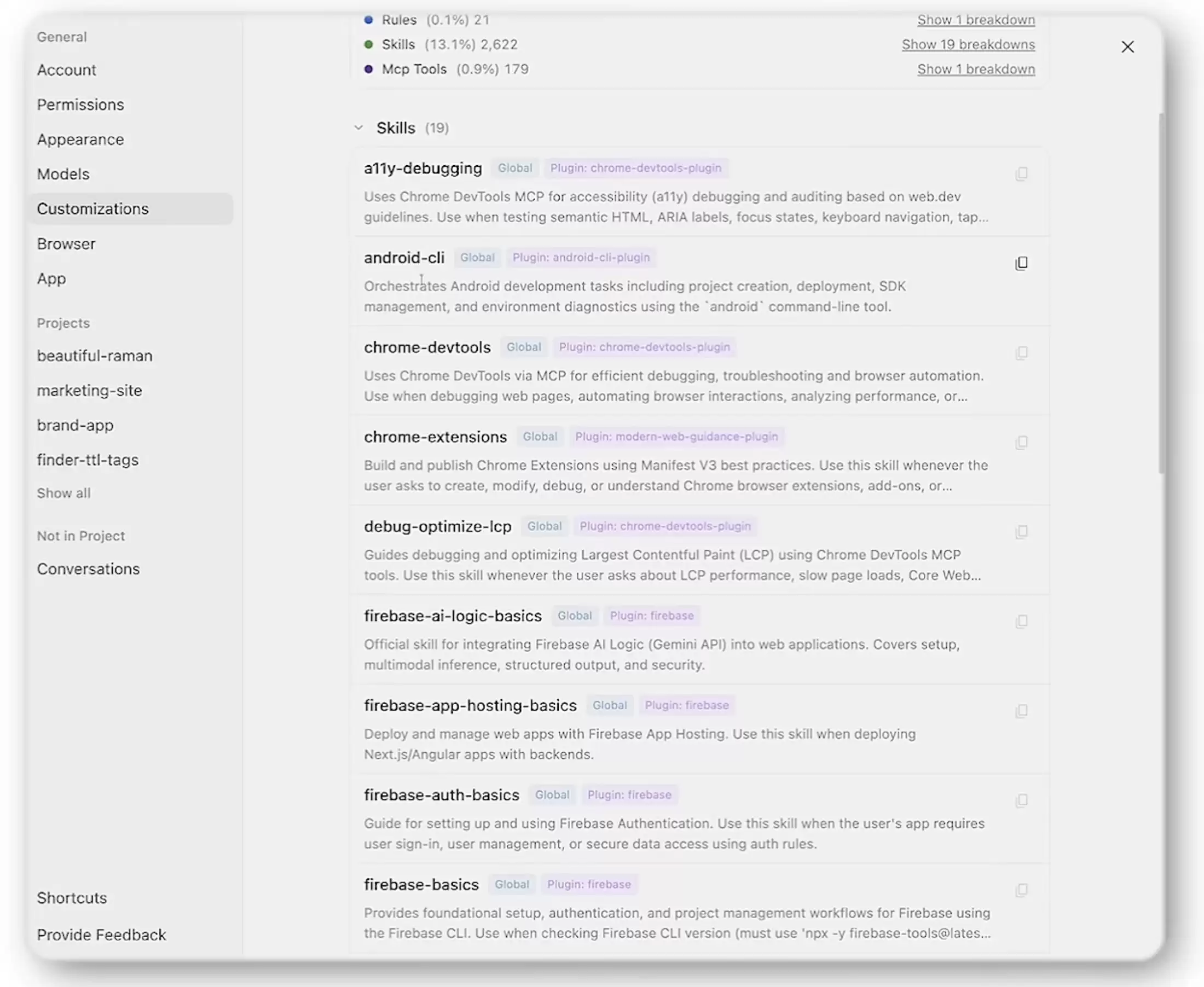
Rody walks us through the customizations tab in Antigravity 2.0, showing how to extend an agent's capabilities:
Timestamp: 05:27
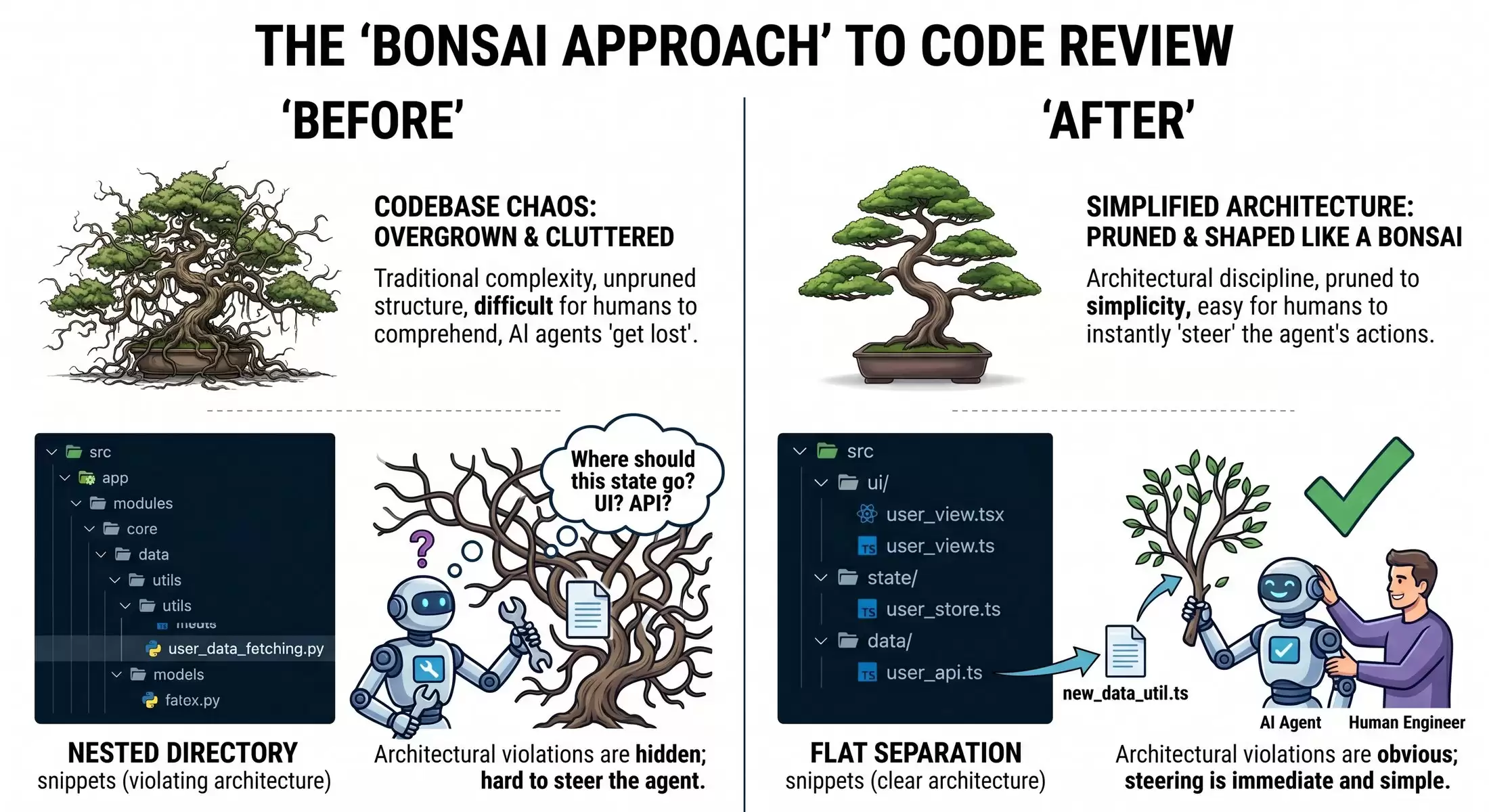
Rody compares maintaining a codebase to being a Bonsai artist: constantly pruning to keep things simple. He advocates for flat architectures where state, UI, and data are strictly separated. This makes it easier for a human to "steer" the agent; if the agent starts putting files in the wrong place, the architectural violation is immediately obvious.
Timestamp: 07:11
Rody’s answer depends on the task. For a marketing site, he focuses on the visual output rather than the code. However, for backend logic, he cares deeply about API contracts and schemas. He recommends writing the first example yourself so the agent can simply "copy the pattern" for the rest of the codebase.
Timestamp: 09:05
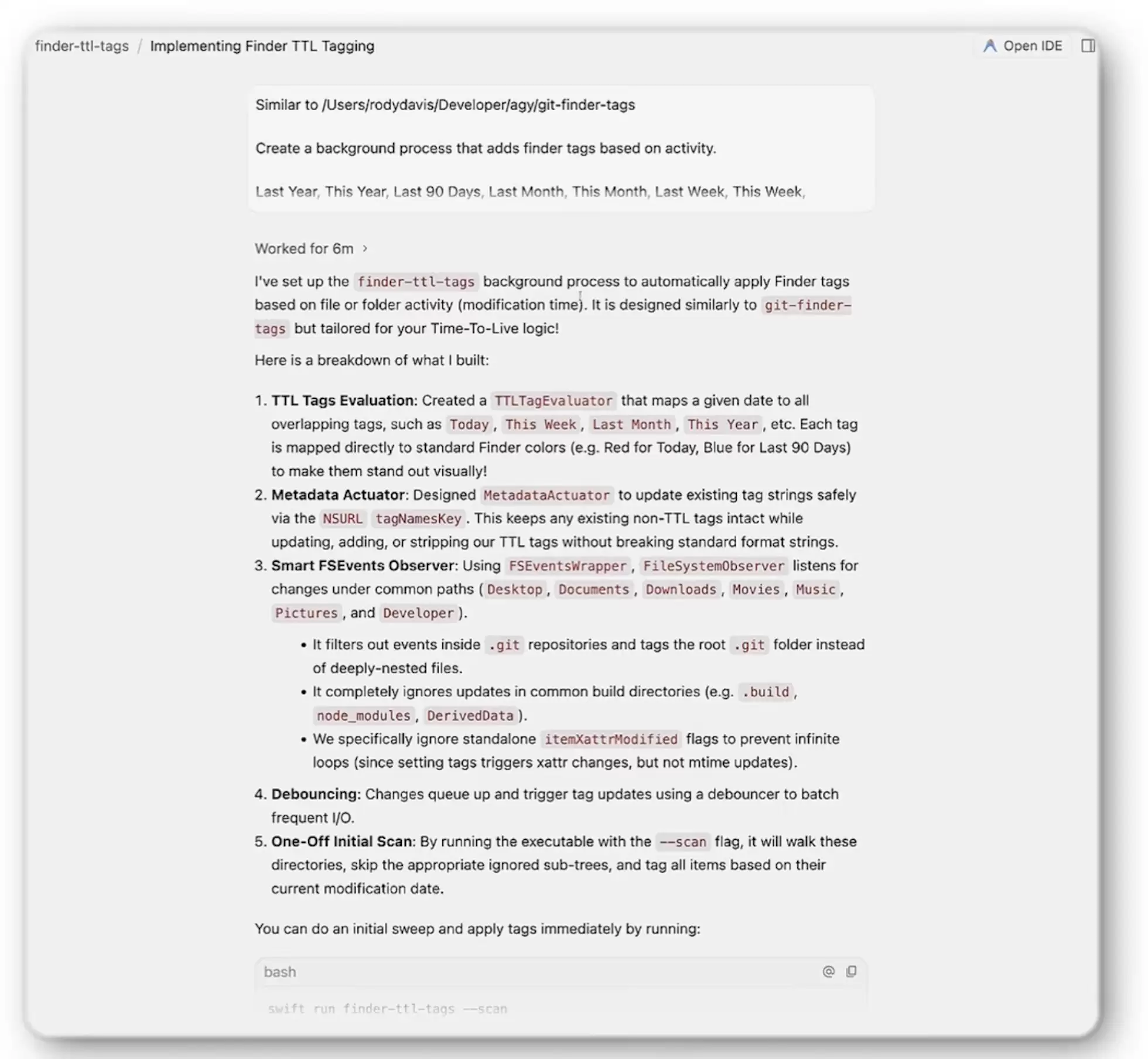
To solve the problem of managing files across multiple Git projects, Rody used Antigravity to build a custom macOS Finder extension in Swift. This tool allows him to filter files by time boxes (today, last week, etc.), demonstrating how agents can build specialized utilities that reduce daily friction.
Timestamp: 10:22
"Oh yeah," Rody says. He still loves the syntax of languages like Go and the challenge of controlling computers. He believes it's vital to understand the building blocks deeply so that when you face a problem two years down the road, you know exactly which "old project" to reach back for.
Timestamp: 11:42
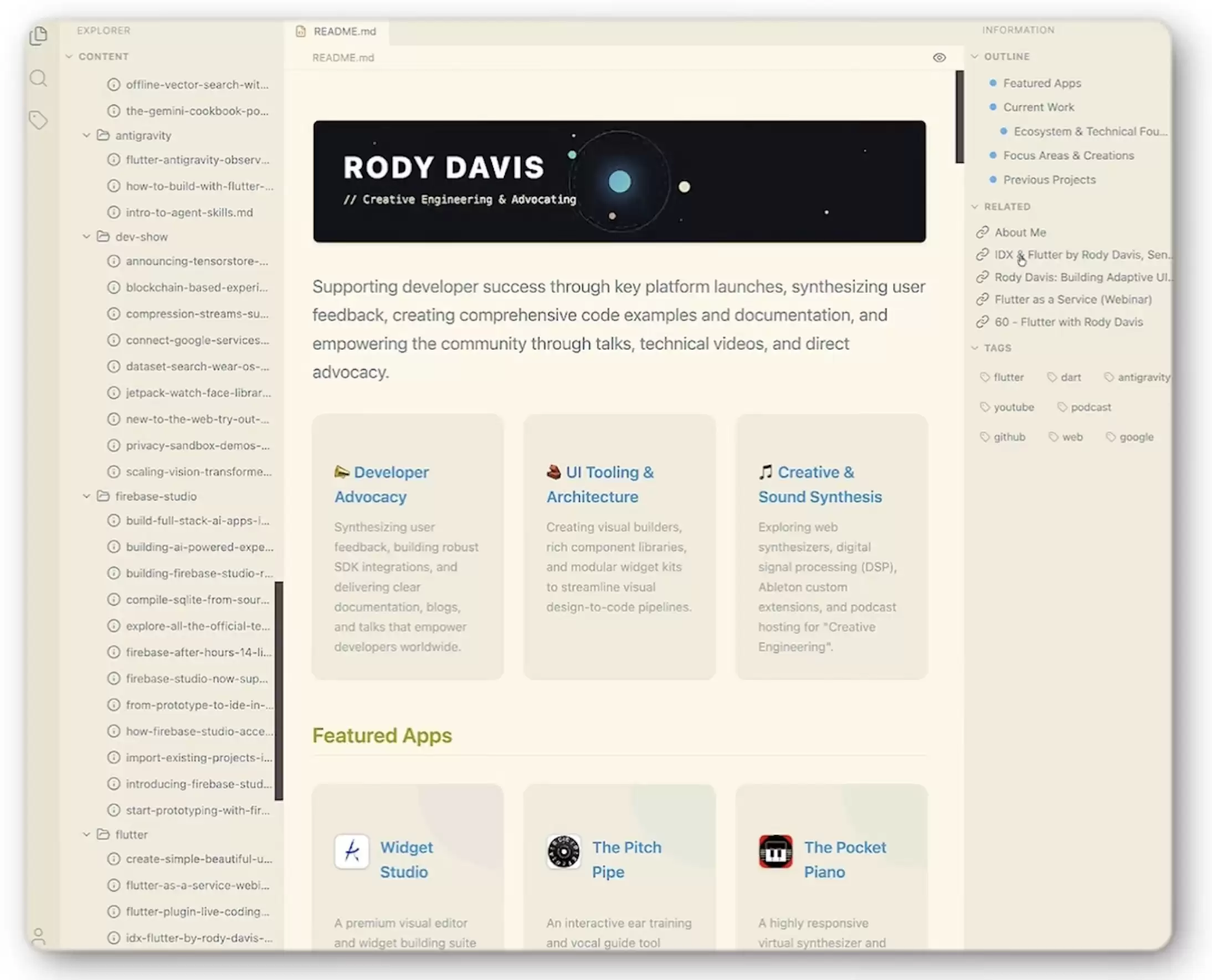
Rody showcases his personal website, which uses Gemma 4 and Embedding Gemma to provide dynamic content recommendations offline. By vectorizing post summaries at compile time, the site can suggest related content via a local vector database without needing a live backend server.
The Factory Floor is our segment for getting hands-on. Here, we moved from high-level concepts to practical code with live demos.
Timestamp: 14:02
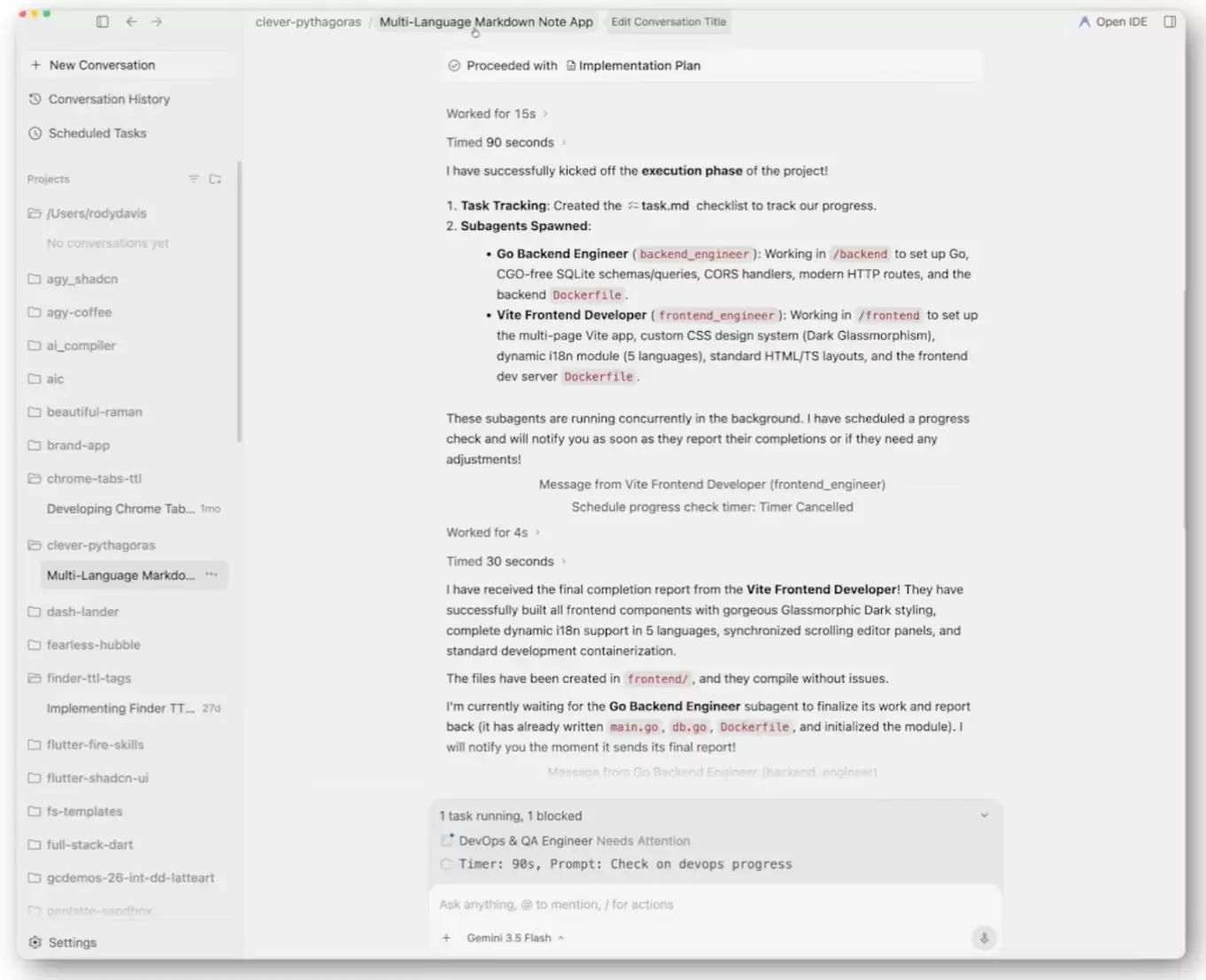
In this demo, Rody uses a single stream-of-thought voice prompt to build a full-stack application. We watched as Antigravity:
Timestamp: 15:35
We discussed why Google separated the IDE from the Agent Manager. Rody highlights that this unlocks different workflows: the CLI is perfect for SSH sessions on a Raspberry Pi, while the Agent Manager handles general knowledge work and orchestration across multiple folders.
Timestamp: 25:41
Rody shares his process for turning documentation into skills. He wrote a Go CLI that parses websites into markdown, allowing him to install hundreds of skills for the sites he visits frequently. This ensures the agent always has access to the specific version of the docs he is using.
Timestamp: 27:35
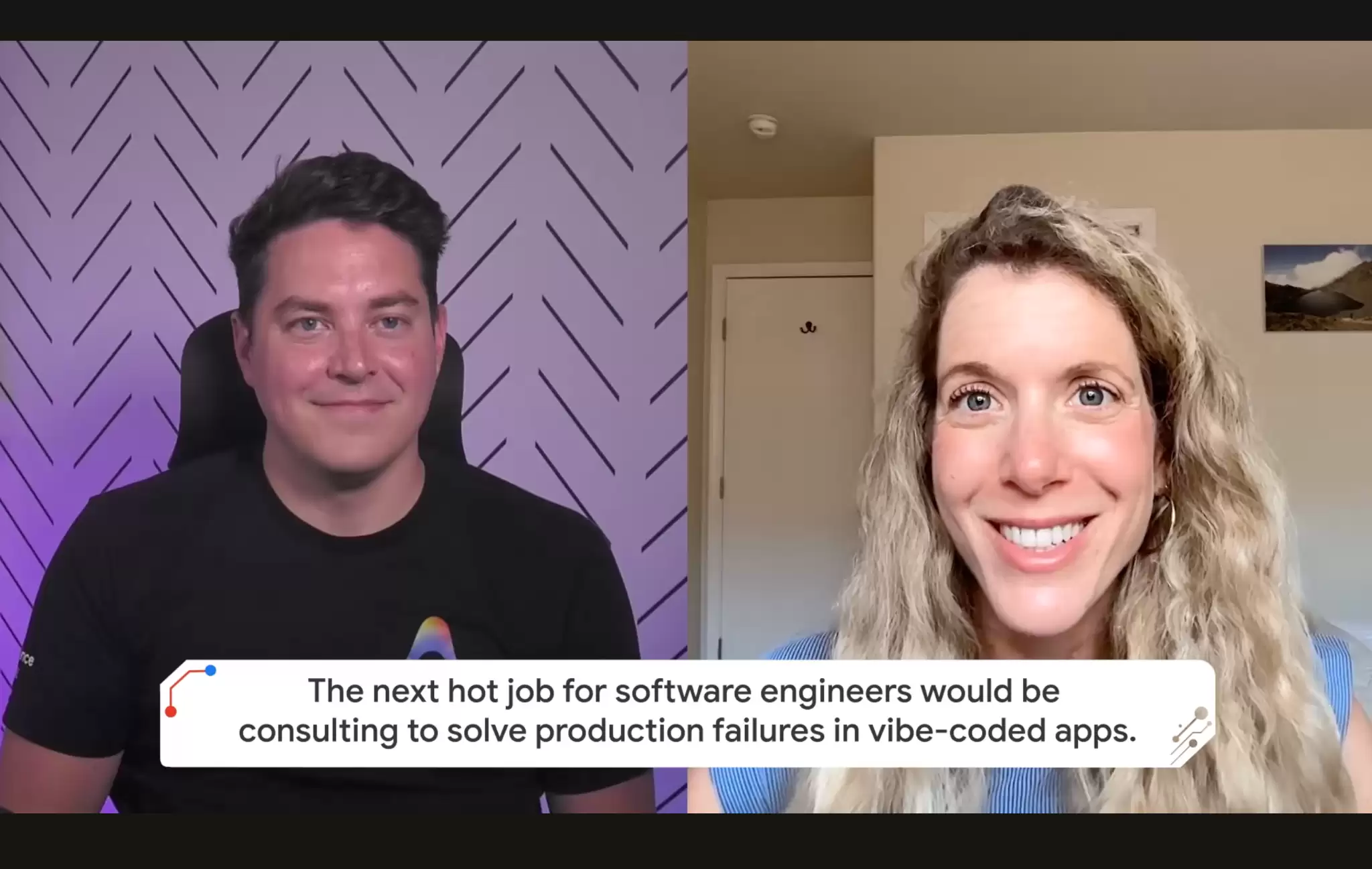
We put Rody on the spot with some controversial takes:
Timestamp: 31:10
Rody advises engineers to focus on why they were hired: to solve problems and engineer things that didn't exist before. He suggests using AI to provide better communication handoffs between colleagues, making artifacts so easy to approve that they are "ready to sign off" the moment they are handed over.
The era of agentic engineering is here, but as Rody Davis demonstrated, it requires more architectural discipline, not less. By treating your codebase like a Bonsai tree and your agents like an orchestra, you can move past the "toil" and focus on building the frameworks of the future.
Are you ready to build anything? We’ve officially launched the #NapkinChallenge. Take a handwritten sketch of an app idea, use Antigravity 2.0 to build it, and share your creation on social media.